The greenback remained range bound against the yen yesterday following the release of solid economic data from both the US and Japan. While Japan’s first-quarter GDP data surpassed estimates, the US housing starts data for April met the market’s expectations. Overall, the USD/JPY pair traded between 135.65 and 137.45 in the past 24 hours.
According to the preliminary data published by Japan’s Cabinet Office, the country’s GDP grew by 0.40% q-o-q in the March 2023 quarter, following no economic growth in the previous quarter and higher than forecasts of a 0.20% increase.
The growth was led by a 0.60% increase in private consumption in the first quarter, compared with a mere 0.20% rise in the December 2022 quarter. This is the highest growth since the June 2022 quarter. Furthermore, business investment unexpectedly rose by 0.90% in 1Q 2023, recovering in a robust manner after a 0.70% decline in the previous quarter. In the meantime, government spending remained flat for the third successive quarter, while the net trade balance turned into a deficit as exports fell by 4.20%. Imports declined 2.30% in the March 2023 quarter.
Overall, on an annualized basis, Japan’s GDP increased by 1.60% in the January–March 2023 period. Inflation has been above the central bank’s targeted level of 2%, but BoJ Governor Kazuo Ueda anticipates it to decline below that level.
According to the data published by Japan’s Ministry of Economy, Trade, and Industry, the country’s industrial production grew by 1.10% m-o-m in March, following a 4.60% increase in the previous month and a greater than flash reading of 0.80% gain. Economists did not anticipate any change in the flash reading. The reported figure reflects the second consecutive month of growth in industrial output.
The growth was led by a 5.20% rise in motor vehicle production in March. Likewise, production machinery grew by 5.80%. Chemicals, excluding inorganic, organic medicine, and chemicals, rose by 3.70%.
On an annual basis, industrial output declined by 0.60% in March, reflecting the fifth successive decline, following a 0.50% decrease in the prior month.
According to the US Census Bureau, the country’s building permits fell to 1,416,000 units in April from 1,437,000 in May, disappointing economists who were expecting an increase to 1,44,000 units. The reported figure is 21.10% lower than the April 2022 figure of 1,795,000 units. Single-family authorizations in April stood at 855,000 units, up 3.10% from the March level of 829,000.
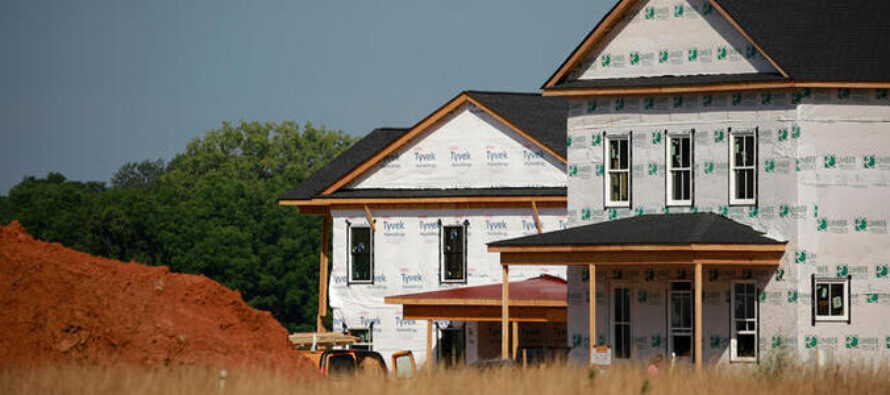
The Census Bureau also stated that housing starts rose to 1,401,000 units in April from 1,371,000 units in the previous month, in line with economists’ estimates. The reported figure is 22.30% lower than the April 2022 reading of 1,803,000 units. Single-family housing starts were 846,000 units, up 1.60% from the March level of 833,000.
The solid economic data from both countries are expected to keep the USD/JPY pair range bound in the short term.
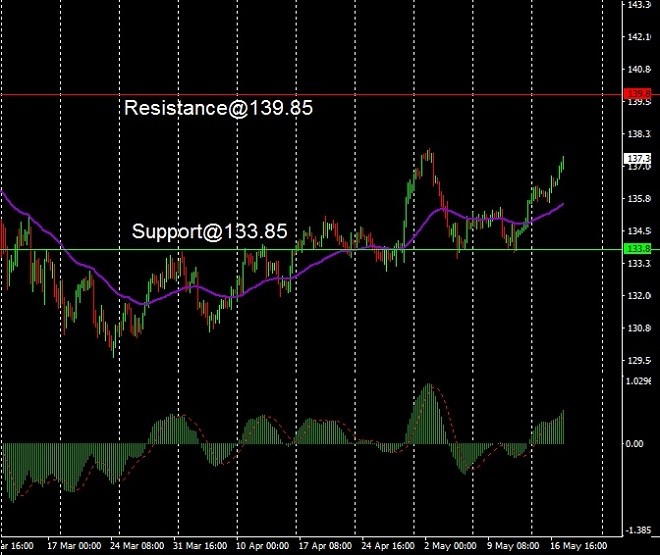
The historical price chart indicates that the USD/JPY pair is rising after testing support at 133.85. The next resistance is anticipated only near 139.85. Additionally, the currency pair is trading above its 50-day moving average while the MACD indicator is showing a positive reading. Therefore, we anticipate the USD/JPY pair to remain in an uptrend in the short term.
Disclaimer: Any financial trading analysis offered here is our opinion and is not intended as advice or direction for investors. We cannot guarantee the success of any trades made as a consequence of this article, and we encourage traders to incorporate a strong money management strategy to limit losses when they enter the markets. Please use this article as part of your own research before formulating strategies prior to trading.