The GBP/AUD pair remained range-bound yesterday despite the release of better-than-anticipated GDP data (December quarter) from Australia. Concerns over the outbreak of coronavirus in China and other countries have turned the sentiment bearish towards the Aussie.
China is the largest trading partner of Australia. The Aussie was also weakened by a pre-emptive rate cut by the RBA (Reserve Bank of Australia). Similarly, a slight dip in the UK service sector performance in February, reported by IHS Markit, also kept the pound range bound. In the past 24 hours, the GBP/AUD pair moved between 1.9340 and 1.9495.
The Australian Bureau of Statistics stated that the economy expanded by 0.5% q-o-q in the December quarter. Economists had anticipated the GDP to grow by 0.4% for the reported period. On a y-o-y basis, the GDP grew by 2.2%. While the terms of trade declined by 5.3%, the household saving ratio dropped by 3.6%.
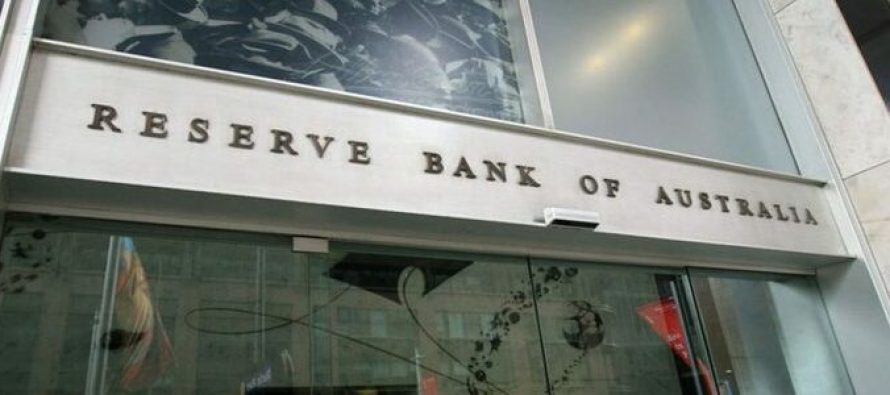
To mitigate the impact of coronavirus, the Reserve Bank of Australia slashed interest rates by 25 basis points on a pre-emptive basis. The central bank clarified that the rate cut was implemented to effectively negate the impact of bushfires and coronavirus.
Notably, the US Fed had announced an emergency rate cut of 50 basis points in the previous day. The RBA’s rate cut has come a week after the domestic financial market saw a massive $200 billion value erosion.
RBA Governor Philip Lowe explained that the rate cut was decided to counter the threat of coronavirus.
Lowe said, “The coronavirus outbreak overseas is having a significant effect on the Australian economy at present, particularly in the education and travel sectors. The uncertainty that it is creating is also likely to affect domestic spending. As a result, GDP growth in the March quarter is likely to be noticeably weaker than earlier expected. Given the evolving situation, it is difficult to predict how large and long-lasting the effect will be.”
Australian Treasury has assessed that the bushfires would trim 0.2% from GDP, while the OECD (Organization for Economic Co-operation and Development) has cautioned that coronavirus could affect Australia’s GDP by at least 0.5%.
Nevertheless, economic modeling by ex-Reserve Bank board member and ANU professor Warwick McKibbin showed that Australian GDP would take a minimum hit of 2% this year even in case of moderate breakout of coronavirus. Sarah Hunter from BIS Oxford Economics opined that the recent GDP figures do not nullify the risk of recession in 2020.
Sarah Hunter said: “Overall, the data confirms that momentum in 2019 was slow and steady (through the year growth was 2.2 percent). But conditions have clearly changed markedly since then. The coronavirus outbreak is putting a substantial strain on the global economy, through disruption to tourism, higher education, global supply chains and financial markets. The hit to services exports and emerging disruption in supply chains, coupled with the earlier drag from the bushfires, will likely result in a contraction in Q1 [the March quarter], and the risk of a recession has increased materially.”
ANZ’s Felicity Emmett echoed that there are bright chances of a recession during the first half of 2020. To justify her opinion, Felicity Emmett highlighted the sluggishness in housing construction, consumer spending, and business investment.
Emmett said, “We expect Q1 [first quarter 2020] GDP to be negative, but given that the recovery looks unlikely to be V-shaped, concerns are rightly growing that Q2 growth will also be negative and that Australia may enter its first recession since the early 1990s.”
The final services PMI data published in the European session yesterday indicated that the IHS Markit/Chartered Institute of Procurement & Supply services Purchasing Managers’ Index declined to 53.2 in February, from 53.9 in January. The flash estimate was 53.30.
This implies the UK service sector grew at a slower rate in February, mainly due to the negative effect on sales from the COVID-19 outbreak. Still, the reported figure was the second-highest score since September 2018 above the neutral value of 50 for the second successive month.
IHS Markit Chief Business Economist Chris Williamson stated that the post-election service sector growth in February was partially affected due to a coronavirus outbreak that disrupted the tourism industry. Despite these disruptions, business sentiment across the service sector recorded its highest level since March 2015. The survey also disclosed a surge in average cost liabilities across the sector.
The rate cut is expected to keep the Aussie bearish in the short-term.
The historical price chart indicates that the GBP/AUD pair has bounced off the support at 1.9312. The next major resistance is anticipated only near 1.9550. Additionally, the stochastic oscillator is also rising towards the bullish region. Therefore, we are expecting the GBP/AUD pair to move up in the short-term.

Disclaimer: Any financial trading analysis offered here is our opinion and is not intended as advice or direction for investors. We cannot guarantee the success of any trades made as a consequence of this article, and we encourage traders to incorporate a strong money management strategy to limit losses when they enter the markets. Please use this article as part of your own research before formulating strategies prior to trading.