The Australian dollar lost ground against the greenback yesterday following reports of worse-than-anticipated building approvals data for January. The better-than-anticipated US unemployment claims data also fueled the Aussie sell-off. Overall, the AUD/USD pair declined from a high of 0.6766 to a low of 0.6718 in the past 24 hours.
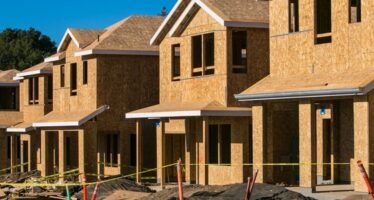
According to the Australian Bureau of Statistics, the country’s building approvals fell by 27.60% m-o-m in January to 12,065 units, following an increase of 15.30% in December and worse than forecasts of a 7.10% decrease.
The estimate for private sector house approvals declined 13.80% in January to 7,560 units, following a 2.10% decrease in December. Private sector dwellings, devoid of houses approved, dropped 40.80% in January, following a 41.90% rise in December. The value of aggregate buildings declined by 18.60%. Likewise, the value of non-residential buildings decreased by 25.60%.
On a y-o-y basis, Australia’s building approvals fell by 8.40% in January 2023.
The value of total building approvals declined by 18.60% in January following an increase of 1% in December. The value of cumulative residential buildings dipped by 13.60% in the same period. This includes a 15.10% fall in new residential buildings and a 4% decline in alterations and additions.
The value of total residential buildings declined by 2.30% in January. This is made up of a 2.50% fall in the value of new residential buildings approved and a 1.10% decrease in the value of alterations and additions.
The US Department of Labor reported a decrease in first-time jobless claims to 190,000 for the week ended February 25. This was lower than the previous week’s figure of 192,000 and surprised economists who had predicted an increase in claims to 196,000. The reading was near the nine-month low of 183,000 recorded in the final week of January, indicating a tight labor market despite reduced labor force participation.
The four-week moving average was 193,000, up from the earlier week’s average of 191,250.
In a separate news release, the Bureau of Labor Statistics stated that US non-farm productivity increased 1.70% q-o-q in the December 2022 quarter following a 1.20% rise in the previous quarter. The preliminary estimate had pegged labor productivity at 3%. Economists had forecast labor productivity of 2.50%. While output grew by 3.10% in 4Q 2022, hours worked rose by 1.40%.
On a y-o-y basis, productivity fell by 1.80% in the December 2022 quarter, reflecting a 0.70% rise in output and a 2.60% increase in hours worked.
Overall, in 2022, productivity declined by 1.70%, reflecting the steepest drop since 1974, when productivity fell by a similar percentage.
The weak Australian building approvals data is expected to keep the AUD/USD pair slightly bearish in the short term.
Technically, the AUD/USD pair is declining after facing resistance at 0.6860. The next support is anticipated only near 0.6625. Additionally, the AUD/USD pair is trading below its 50-day moving average while the stochastic indicator is in the bearish zone. Therefore, we anticipate the AUD/USD pair to remain in a downtrend in the days ahead.

Disclaimer: Any financial trading analysis offered here is our opinion and is not intended as advice or direction for investors. We cannot guarantee the success of any trades made as a consequence of this article, and we encourage traders to incorporate a strong money management strategy to limit losses when they enter the markets. Please use this article as part of your own research before formulating strategies prior to trading.