Aided by a robust increase in capacity and air traffic, Deutsche Lufthansa AG (LHA.DE; OTC: DLAKY) reported a narrower net loss in FY 2021, compared with the previous fiscal year. However, the passenger load factor declined on a y-o-y basis. Moving forward, in FY 2022, the airline company anticipates a rebound in air traffic.
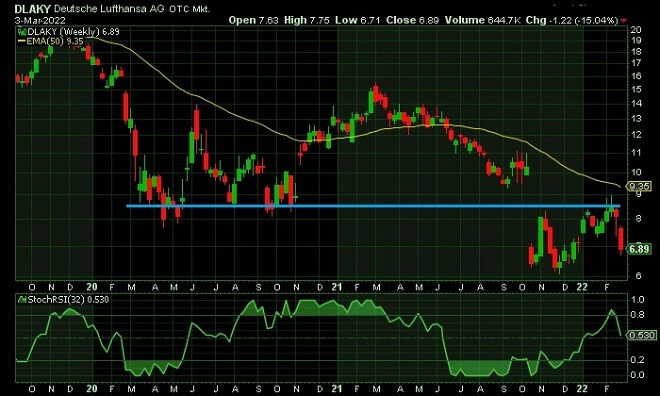
Interestingly, the company believes that the sharp rise in COVID-19 infections (omicron strain) will affect the airline’s performance in the first quarter. For the next three quarters, Lufthansa expects a considerable decrease in infections, paving the way for an increase in business and holiday travel. Following the results, the stock lost $0.48 or 6.54% to close at $6.89.
The German company’s FY 2021 group revenue was €16.81 billion, an increase of 24% from €13.59 billion in FY 2020. The increase was led by a rise in demand for flights, a direct outcome of a worldwide increase in vaccinations and the easing of travel prohibitions.
The company reported a FY 2021 net loss that narrowed to €2.19 billion, or €2.99 per share, from a net loss of €6.73 billion, or €12.51 a share in FY 2020. Lufthansa’s main performance gauge, adjusted EBIT, also ended up in red at -€2.35 billion, compared with an earlier year’s loss of €5.45 billion.
Adjusted EBITDA loss narrowed to €90 million in FY 2021, compared with a loss of €2.89 billion in FY 2020. Adjusted EBITDA margin stood at -0.50% in fiscal 2021, a considerable improvement from -21.30% in the previous year.
Furthermore, Lufthansa reported a 31% y-o-y increase in traffic revenue to €11.88 billion. Also, passengers rose by 29% y-o-y to 46.95 million. Additionally, the passenger airlines posted a 32% y-o-y rise in available capacity. This translates to available seat kilometers of 145.14 billion. Traffic surged 29% to 89.40 billion revenue seat kilometers.
Passenger load factor inched down 1.60% to 61.60%. Cargo load factor rose by 1.60% to 71.40%.
Commenting on the prevailing situation, Carsten Spohr, CEO of Lufthansa, said, “[…] The Ukraine war’s political and economic ramifications might have an impact on our company’s future in dimensions we can’t yet predict. Overall we are well-equipped to resume our upward trajectory amid another troublesome year.”
The weak FY 2021 performance and uncertainty over the Ukraine-Russia war is expected to keep the stock of Deutsche Lufthansa range bound with bearish bias in the short term.
The historical price chart indicates that the stock of Deutsche Lufthansa is declining after facing resistance at 8.50. The next support is anticipated only near 6. Additionally, the stock is trading below its 50-day moving average, while the stochastics RSI indicator is descending. Therefore, we are anticipating the currency pair to remain in a downtrend in the near term.
Disclaimer: Any financial trading analysis offered here is our opinion and is not intended as advice or direction for investors. We cannot guarantee the success of any trades made as a consequence of this article, and we encourage traders to incorporate a strong money management strategy to limit losses when they enter the markets. Please use this article as part of your own research before formulating strategies prior to trading.