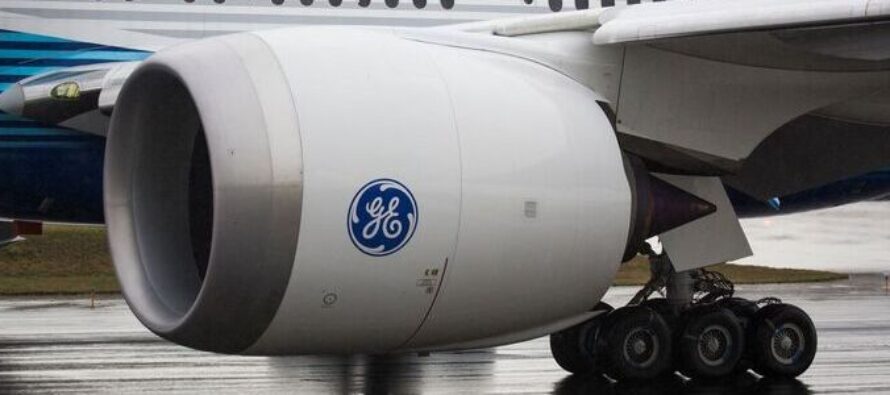
General Electric (GE) is on the verge of finalizing a $30 billion merger deal with AerCap Holdings (AER), an Irish enterprise. The agreement involves merging GE’s General Electric Capital Aviation Services (GECAS), which is engaged in the aircraft leasing business, and listed company AerCap (AER), which hires aircraft.
The merger would expedite the industrial giant’s turnaround while providing the much-needed relief to the core aviation division as COVID-19 related travel restrictions keep the business under stress.
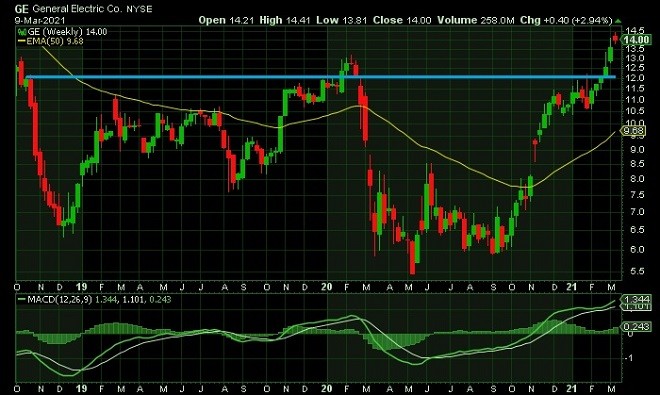
Overall, GE’s balance sheet and cash flow are likely to improve. The stock closed at $14.00, almost flat from the previous close.
The staggering deal will significantly reduce the size of the company’s lending division, GE Capital. Furthermore, the agreement opens up another opportunity for the company to raise cash. Investors are excited and hope that GE and its CEO, Larry Culp get it done.
The deal would be another landmark in the aviation business. GECAS has roughly $36 billion worth of assets. Likewise, AerCap has assets worth $42 billion. To give an idea of how big the merged entity will be, another listed aircraft hiring firm, Air Lease Corp. (AL), has roughly $25 billion worth of assets.
Before last February (pre-pandemic period), AerCap reported annual net earnings of about $1.10 billion, or roughly 2.6% profit on its underlying assets. Likewise, GECAS recorded a profit of approximately $1.20 billion or 3% earnings on its underlying assets.
If the deal goes through, GE might own a minority stake in the merged entity based on assets. On the contrary, in terms of profits, GE might be the primary partner.
Furthermore, upon a merger, GE would likely handover its air leasing division to AerCap in return for AerCap’s stock. It is just an assumption. GE has refrained from divulging details.
GECAS is a division of GE Capital, which finished 2020 with roughly $121billion worth of assets. GE Capital would be left with $80 billion worth of support after the purchases above are removed from the books.
The deal would pave the way for cutting down the size of GE Capital. The $80 billion in assets would still represent 67% of the parent company’s market capitalization. The finance asset to market capitalization ratio of Deere (DE) is 37%. In the case of Caterpillar (CAT), the ratio is roughly 25%.
The ratio reflects the level to which a company could be affected due to problems in the finance division. Even after the merger above, GE would have a large finance division, but certainly smaller than what it is currently. Back in 2008, GE Capital had assets worth $600 billion.
Culp, who took reins in 2018, made it a priority to cut down GE Capital’s size. In case the GECAS merger deal goes through, GE Capital’s assets, as mentioned above, will be down to $80 billion from $130 billion. The investments would get transferred to the books of AerCap.
That sounds good as investors can easily understand the value of GECAS as it would reflect in the stock price of AerCap. GE can also raise cash, if necessary, by selling AerCap stock. The mechanism seems better than scouting for a deal to divest GECAS as a whole.
More importantly, the merged entity will be worth higher than the two individual businesses. As said earlier, it would be another significant step in cleaning up GE’s balance sheet.
The news of talks between GE and AerCap is expected to keep GE’s stock slightly bullish in the short-term.
The historical price chart indicates that the stock of GE has broken above its long-term resistance at 12. The MACD indicator is making new highs. Therefore, we are anticipating the stock to resume its uptrend in the days ahead.
Disclaimer: Any financial trading analysis offered here is our opinion and is not intended as advice or direction for investors. We cannot guarantee the success of any trades made as a consequence of this article, and we encourage traders to incorporate a strong money management strategy to limit losses when they enter the markets. Please use this article as part of your own research before formulating strategies prior to trading.