

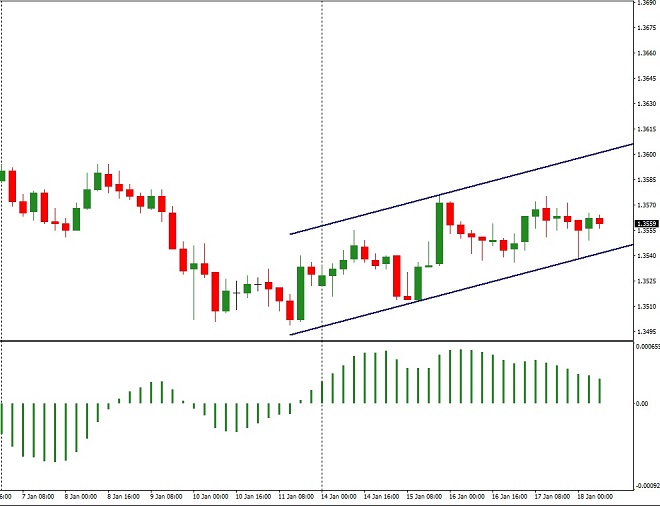
In December, Singapore’s exports decreased the most in more than two years, indicating that the tentative growth forecast for 4Q 2018 will be adjusted down. Following the release of the export data, the USD/SGD pair rose from a low of 1.3525 to a high of 1.3575.
Global slowdown affects Non-Oil Domestic Exports (NODX)
According to Enterprise Singapore, NODX fell 8.5% year-on-year following a revised 2.8% drop in November. Exports of several major goods have recorded a sharp decline.
- Electronics, down 11.2%. Electronic exports declined 11.3% year-on-year after a 4.3% increase in November. The export of personal computers, diodes & transistors, disks, and other media products recorded large double-digit declines. Exports of non-electronic goods decreased by4% year-on-year, after a 5.4% decline in November. The downturn in exports of high tech machinery, pharmaceutical products, and primary chemicals led to massive declines. Last month, both electronic and non-electronic NODX declined.
- Pharmaceuticals, down 26.8%
- Primary chemicals, down 28%
- Specialized machinery, down 32.5%
On a seasonally adjusted m-o-m basis, Singapore’s exports decreased by 5.7% in December, after the revised 4.3% decrease in November. However, total trade increased by 1.6% in December, following a 7.4% increase in the earlier month. Imports grew by 6.1%, while exports dropped by 2.5%.
The decline was in complete contrast to economists’ forecast of 2% growth. The reported drop in exports was the worst since the October 2016 collapse when exports plunged by 14% on a y-o-y basis.
Ms. Selena Ling, head of treasury research and strategy at OCBC, told Reuters “This could show that US-China trade talks have become a ruse, falling in line with disappointing China trade data. There is a likelihood that (export fall) will continue into the first quarter.”
Shipments to eight of the country’s top 10 export markets declined. The only two key markets to which exports increased were China and the United States. The decline in the NODX was primarily due to a drop in demand from the EU (-28.7%), South Korea (-39.1%), and Malaysia (-15.5%). Exports to the US (+31.1%) and China (+15.4%) recorded strong growth.
In an interview with Channel News Asia, Ms. Ling said “This suggested deterioration in global and regional growth prospects and was likely exacerbated by the fading of some of the pre-emptive frontloading activities within the region in 3Q18 in anticipation of the US-China tit-for-tat tariffs.”
Regarding the sharp decline in exports, ING economist Robert Carnell said: “All of the components are heavily down. Pharmaceuticals are particularly weak. Having been quite strong earlier last year, pharma has moved from the thing that was holding everything up to being one of the other factors dragging Nodx down. Today’s data almost certainly will result in a downward revision to the 1.6%QoQ 4QGDP release and will either confirm 2018 at our lower estimate, or perhaps even take it a notch lower still.”
Similarly, DBS senior economist Irvin Seah said: “What is most disconcerting is the 5.7 percent month-on-month decline (in Nodx). We already had two months of month-on-month dips, and if such a trend continues, this points to a dimmer outlook for overall manufacturing as well as the Singapore economy, heading into 2019.”
The economist also opined that the industrial production data scheduled to be released next week would give an idea about the direction in which the economy is heading. The weak data further decreases the chances of monetary tightening by the Monetary Authority of Singapore. Such a scenario fundamentally supports the Singapore dollar’s downward trend.
Technically, the US dollar is moving within an ascending channel as shown in the image below. Furthermore, the positive reading of the oscillator of moving average indicator points to the underlying bullishness in the USD/SGD pair. The next resistance for the currency pair is expected only at 1.3620 levels. As a result, we anticipate the currency pair to move up further in the short term.
Disclaimer: Any financial trading analysis offered here is our opinion and is not intended as advice or direction for investors. We cannot guarantee the success of any trades made as a consequence of this article, and we encourage traders to incorporate a strong money management strategy to limit losses when they enter the markets. Please use this article as part of your own research before formulating strategies prior to trading.


