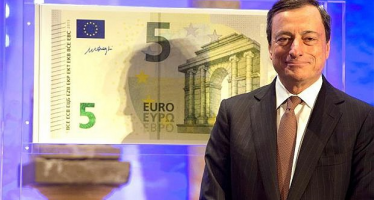
The euro remained range-bound against the greenback on Friday following the release of upbeat economic data from both Europe and the US. While the Eurozone producer price index was unexpectedly positive, the US non-farm employment change blew away forecasts. Overall, the EUR/USD traded between 1.0790 and 1.1032.
According to the data published by the French National Institute of Statistics and Economic Studies (INSEE), the country’s industrial production increased by 1.10% m-o-m in December, following a 2% rise in December and exceeding expectations of a 0.20% growth.
The mining & quarrying, energy, and water supply waste management sector posted a growth of 6%. However, manufacturing output eased to 0.30% in December from 2.40% in November. Construction declined by 0.10%.
On a y-o-y basis, industrial production rose by 1.40% in December 2022.
The S&P Global French Services Purchasing Managers’ Index inched lower to 49.40 in January from 49.50 in December. The flash estimate pegged the final services PMI at 49.20. Economists’ did not anticipate any change in the flash estimate.
The reported reading reflects the third successive month of contraction in the country’s services sector and at the sharpest rate since March 2021. Fresh orders declined in January, against the backdrop of a sluggish demand scenario. However, employment increased and hit a three-month high. Overall, the level of optimism stood at the strongest level in six months, aided by anticipations of a rise in customer activity and a consequent increase in sales.
The S&P Global Germany Services PMI inched up to 50.70 in January from 49.20 in December and was greater than the preliminary estimate of 50.40. Economists did not anticipate any change in the preliminary estimate. The reported reading reflects the first growth in seven months. A reading below 50 indicates contraction and vice versa. Underlying demand was weak.
Furthermore, job growth increased while wage increase demands and higher energy prices paved way for a rise in businesses’ operating expenses. Overall, firms were more optimistic about the year-ahead outlook for economic activity.
The S&P Global Eurozone final services PMI increased to a six-month high of 50.80 in January from 49.80 in December and was greater than the initial estimate of 50.70. Economists did not anticipate any change in the initial estimate. Notably, after six successive months of contraction, the Eurozone economy recorded a slight growth at the beginning of 2023.
Also, the Eurozone final composite output index rose to a seven-month high of 50.30 in January from 49.30 in December. Notably, the reading reflects the third consecutive monthly increase.
Higher levels of economic activity were supplemented by robust job growth as the Eurozone’s labor market continued to demonstrate a noteworthy level of strength, and also an increase in business optimism. Even though fresh orders declined, the pace of decrease remained the slowest. Order backlogs also fell, specifically in the manufacturing industry.
Looking forward, Eurozone firms were increasingly optimistic about the outlook for the forthcoming 12 months, with the level of positive sentiment reaching a nine-month high.
The Eurozone producer price index (PPI) rose to 1.10% m-o-m in December following a 1% decline in the earlier month, which pleased economists who were expecting a 0.60% decrease for the reported period.
The monthly increase in the PPI was primarily led by a 2.50% rise in the energy sector. Also, non-durable consumer goods posted a 0.50% increase, while durable consumer goods recorded a 0.40% rise. Capital goods reported 0.30% growth. However, intermediate goods posted a decline of 0.5%. Also, excluding energy, the PPI fell by 0.10%.
On a y-o-y basis, industrial producer prices in the Eurozone surged 24.60% in December 2022. With a 48.60% surge, the energy sector led the increase. Non-durable consumer goods posted a 15.60% rise. While intermediate goods recorded a 13.80% increase, durable consumer goods reported a 9.70% growth. Also, capital goods reported a 7.50% rise. Excluding energy, industrial prices rose by 12.30%y-o-y in December 2022.
Overall, the Eurozone industrial producer prices jumped 34.40% in 2022, compared with 2021.
According to the data published by the Bureau of Labor Statistics, the country’s non-farm sector added 517,000 jobs in January, following the addition of 260,000 jobs in the prior month, and surpassed forecasts of 193,000 job additions.
The leisure and hospitality sector added 128,000 jobs in January. Likewise, professional and business services recorded an addition of 82,000 jobs. Professional, scientific, and technical services reported an addition of 41,000 jobs.
Government employment rose by 74,000 in January. Similarly, employment in state government grew by 35,000. While the healthcare sector added 58,000 jobs, employment in retail trade increased by 30,000. Also, the construction sector added 25,000 jobs in January.
Overall, the US unemployment rate declined to 3.40% in January from 3.50% in December, which pleased economists who were expecting a rise in the unemployment rate to 3.60%.
According to the data published by the US Institute for Supply Management, the country’s ISM Services PMI rebounded to expansion territory, with the corresponding index surging to 55.20 in January from a two-and-a-half-year low of 49.20 in December and greater than forecasts of 50.40. A reading below 50 indicates contraction and vice versa.
While the business activity/production index increased to 60.40 in January, backlogs of orders rose to 52.90 in the same period. The fresh orders index rebounded to 60.4. Employment inched up to 50. Notably, the price index decreased to 67.80 in January from 68.10, reflecting an easing of cost pressures.
The upbeat economic data from both the Eurozone and the US is expected to keep the EUR/USD pair range bound in the short term.
Technically, the EUR/USD pair is declining after facing resistance at 1.0875. The next support is anticipated only near 1.0590. Additionally, the MACD indicator is showing a negative reading. Therefore, we anticipate the EUR/USD pair to remain in a downtrend for the next few trading sessions.

Disclaimer: Any financial trading analysis offered here is our opinion and is not intended as advice or direction for investors. We cannot guarantee the success of any trades made as a consequence of this article, and we encourage traders to incorporate a strong money management strategy to limit losses when they enter the markets. Please use this article as part of your own research before formulating strategies prior to trading.