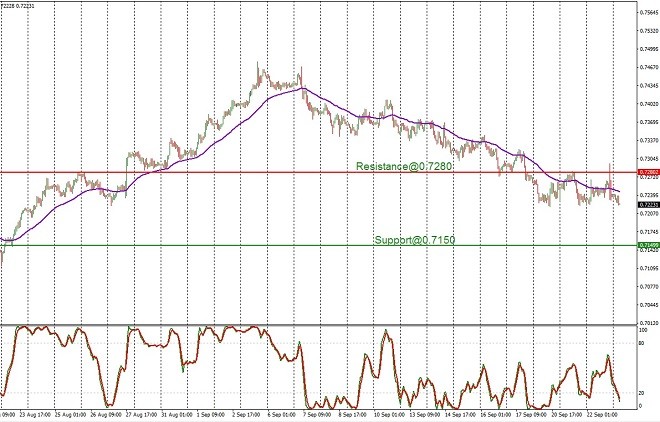
The US dollar gained against its rivals, including the Aussie, following the release of a hawkish policy statement by the Federal Reserve. The statement signals likely tapering a bond-buying program by November and even a rate hike by next year. The AUD/USD pair declined from a high of 0.7280 to a low of 0.7220 in the past 24 hours.
According to the data published by the US National Association of Realtors, the existing home sales, following two consecutive months of increases, declined to 5.88 million in August, from 5.99 million in the prior month, but surpassed the reading of 5.87 million anticipated by economists.
Notably, in August 2020, the existing home sales were 5.97 million. This implies a sales decline of 1.50% y-o-y in August 2021.
Commenting on the data, Lawrence Yun, NAR’s chief economist, said, “Sales slipped a bit in August as prices rose nationwide.”
At the end of August 2021, total housing inventory stood at 1.29 million units, a decrease of 1.50% from July and a drop of 13.40% on a y-o-y basis (1.49 million units). Furthermore, unsold inventory represented a 2.6-month supply based on the prevailing pace of sales, unaltered from July but a decrease from three months in August 2020.
The median existing-home price increased 14.90% y-o-y to $356,700 in August 2021. The rise in existing home price reflects the 114th consecutive month of yearly gains. Interestingly, first-time buyers represented 29% of total sales in August 2021, a slight decline from 30% in the prior month and a drop from 33% in August 2020.
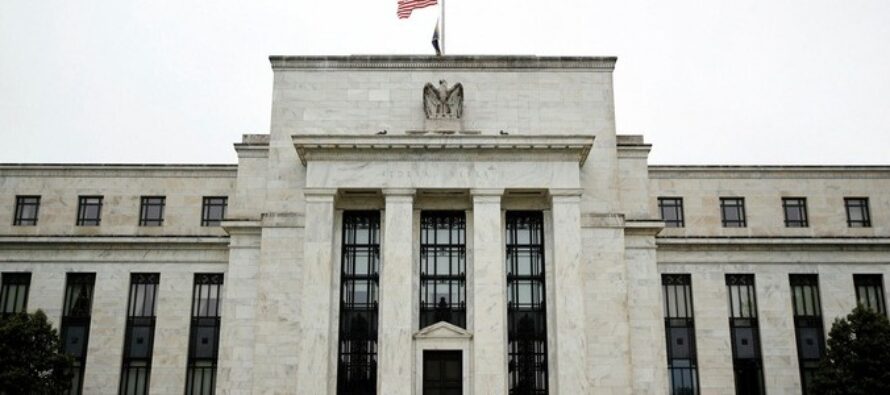
In the much-awaited Fed policy meeting, through unanimous voting, the FOMC (Federal Open Market Committee) opted to maintain the benchmark interest rate between 0% and 0.25%, and carry on with the purchase of Treasuries and other securities (mortgage-backed) at a rate of $120 billion per month.
Notably, forecasts for 2024, published for the first time, suggested the federal funds rate (media estimate) at 1.80%. For 2023, the median estimate was upwardly revised to 1%, from 0.60% projected in June. The Fed also stated that it would double the per-counterparty ceiling to $160 billion per day (overnight reverse-repurchase agreement facility).
Furthermore, Fed Chair Jerome Powell has stated that the central bank could start reducing asset buying as early as November (the next policy meeting is scheduled on November 2-3) and end the program by mid-2022, with policymakers revealing their support for lifting benchmark rates by next year. Notably, Powell clarified that tapering should not be construed as a signal for lifting interest rates.
Also, the revised quarterly projections indicated that the executives are evenly divided on the issue of raising the Fed Funds rates by next year. Back in June, the median forecast indicated no lifting of interest rates until 2023.
The US jobless rate declined to 5.20% in August, far lower than the April 2020 pinnacle of 14.80%. However, it is still higher than the 3.50% rate that existed in February 2020. As per Fed, inflation stood at 4.20% in the year ended July, more than twice the 2% target of the central bank.
The hawkish policy statement by the US Federal Reserve is expected to keep the AUD/USD pair range-bound with slight bearish bias in the short term.
The historical price chart indicates that the AUD/USD pair is declining after facing resistance at 0.7280. The next support is anticipated only near 0.7150. Additionally, the currency pair is trading below its 50-day moving average, while the stochastics indicator is in the bearish region. Therefore, we are anticipating the currency pair to remain in a downtrend in the days ahead.
Disclaimer: Any financial trading analysis offered here is our opinion and is not intended as advice or direction for investors. We cannot guarantee the success of any trades made as a consequence of this article, and we encourage traders to incorporate a strong money management strategy to limit losses when they enter the markets. Please use this article as part of your own research before formulating strategies prior to trading.