The Kiwi dollar lost ground against the greenback yesterday following the dovish statement made by the Reserve Bank of New Zealand while announcing its decision to leave the benchmark interest rates unchanged. The US wholesale inventory data was in line with the market’s expectations. There were no other major economic data points yesterday. Overall, the NZD/USD pair declined from a high of 0.6136 to a low of 0.6064 in the past 24 hours.
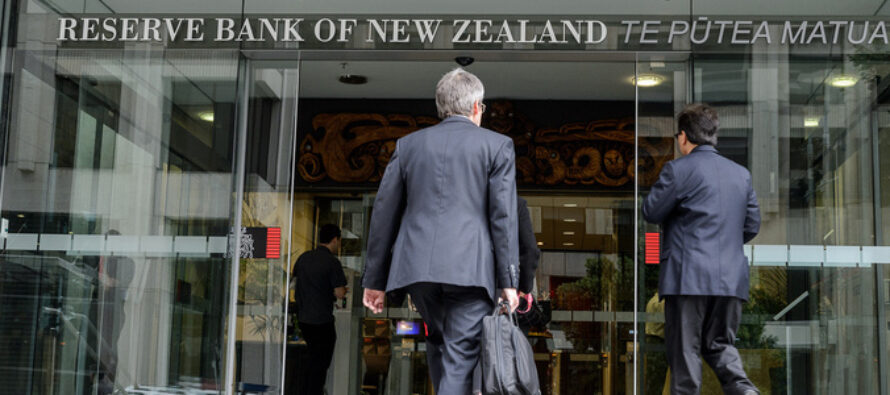
Following the monetary policy meeting, the Reserve Bank of New Zealand (RBNZ) announced its decision to leave the benchmark interest rate unchanged at 5.50%. The decision was in line with economists’ estimates.
While announcing the decision, the central bank signaled its willingness to become less restrictive in the months ahead if inflation eases as anticipated. The RBNZ’s statement was notably more dovish than the market had expected.
Specifically, the statement reads as follows: “The Committee concurred that monetary policy must remain restrictive. However, the degree of this restraint will gradually decrease in line with the anticipated reduction in inflationary pressures.”
In May, the RBNZ stated that monetary policy is anticipated to stay restrictive for a “sustained period.” The central bank also signaled a probable rate hike in the event of persistent inflationary pressure.
Following the announcement, two-year swap rates fell by 11 basis points to 4.6850%, reflecting a six-month low and a likely rate cut of 25 basis points in the October meeting.
The Central Bank of New Zealand further stated that it anticipates inflation to decline to a range of 1% to 3% in the second half of 2024, a decrease from 4% in the March 2024 quarter. The projected range matches the RBNZ’s targeted level.
The central bank indicated that while some domestically generated price pressures remain strong, there are indications that the persistence of inflation will ease as capacity pressures decrease and business pricing intentions adjust.
The RBNZ is the first central bank among developed economies to end policy easing. Since October 2021, the RBNZ has increased the benchmark interest rates by 5.25% to ease inflation.
The interest rate hikes have considerably slowed the country’s economic activities. Notably, New Zealand exited a recession in the March 2024 quarter by recording a GDP growth of 0.20%.
According to the final data published by the US Census Bureau, the country’s wholesale inventories rose by 0.60% m-o-m in May, following a 0.20% increase in the previous month. The initial estimates had pegged the increase at 0.60%. Economists did not anticipate any change in the preliminary estimates.
The dovish statement by the RBNZ is expected to keep the NZD/USD pair slightly bearish in the near term.
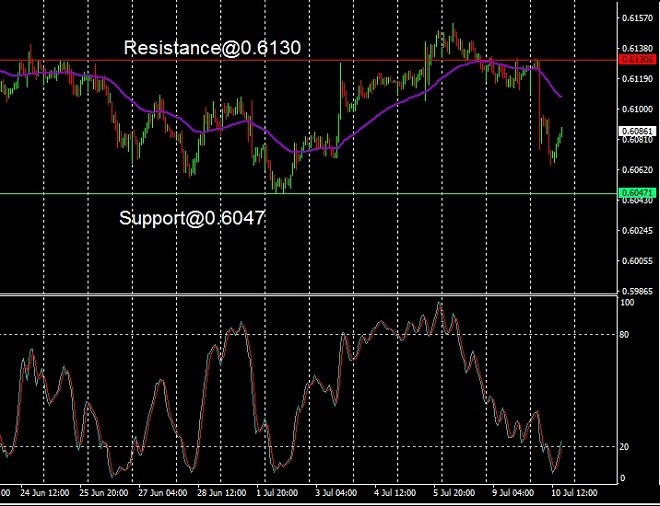
Technically, the NZD/USD pair is declining after facing resistance at 0.6130. The next major support is anticipated to be only near 0.6047. Additionally, the currency pair is trading below its 50-day moving average, while the stochastic indicator is in the bearish zone. Therefore, we anticipate the NZD/USD pair to remain in a downtrend for the next few trading sessions.
Disclaimer: Any financial trading analysis offered here is our opinion and is not intended as advice or direction for investors. We cannot guarantee the success of any trades made as a consequence of this article, and we encourage traders to incorporate a strong money management strategy to limit losses when they enter the markets. Please use this article as part of your own research before formulating strategies prior to trading.