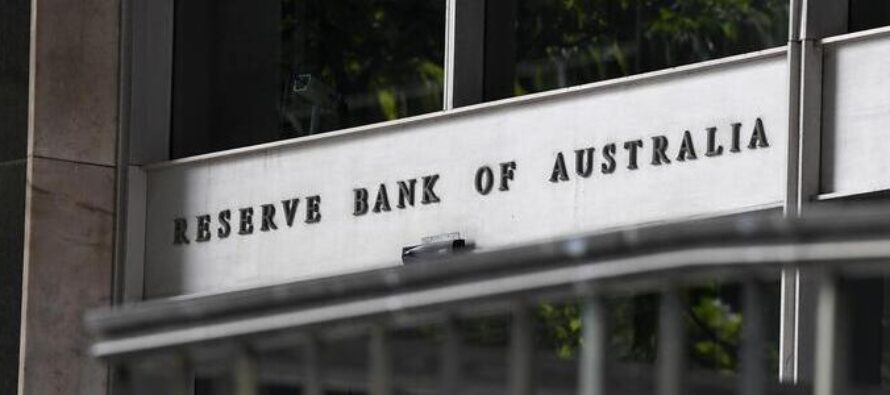
The pound gained ground against the Australian dollar yesterday following the release of better-than-anticipated UK construction PMI data for April. The less hawkish than expected RBA policy statement also enabled the pound to cement its gains against the Aussie. Overall, the GBP/AUD pair rose from a low of 1.8916 to a high of 1.8969 in the past 24 hours.
Following the two-day monetary policy meeting, the Reserve Bank of Australia (RBA) announced its decision to retain benchmark interest rates at 4.35%, which represents a 12-year peak. The decision was broadly in line with economists’ expectations. Back in March, the RBA stopped its rate-tightening process as economic activity declined considerably and inflation seemed to be on course to decrease to its targeted level of between 2% and 3% by next year.
Notably, this is the fourth consecutive meeting at which the RBA chose to leave interest rates unchanged. While acknowledging the challenges in bringing down inflation, the RBA tempered anticipations regarding the necessity for further policy tightening measures.
Nevertheless, the central bank refrained from reintroducing a tightening bias, a move that some economists had anticipated following the Q1 inflation and labor market data, which did not meet expectations.
In a statement, the RBA mentioned that recent data suggests inflation is declining, but at a slower pace than initially anticipated, and it remains elevated. The central bank affirmed its commitment to monitoring potential upside risks. Additionally, it acknowledged the uncertainty surrounding the most effective interest rate trajectory to prompt inflation to return to its target within a reasonable timeframe, stressing that no options are being ruled out.
The less-than-anticipated hawkish statement weakened the Aussie against its peers, including the Euro. Following the policy statement, markets scaled back expectations for another interest rate hike this year, with the implied likelihood of a hike in September dropping to 16% from an earlier level of 43%.
Nevertheless, the RBA’s recent projections indicate an increase in inflation to 3.80% and a continuation at that level until the end of 2024, up from 3.60% in the March 2024 quarter.
The S&P Global UK construction PMI (purchasing managers’ index) increased to 53 in April from 50.20 in March and surpassed readings of 50.40. The reported reading reflects the second consecutive month of growth and the steepest rate of expansion since February 2023.
The commercial building index rose to 53.90, reflecting the first increase since August 2023. Likewise, the index reflecting civil engineering activity grew to 53.60 in April, representing the steepest rate of growth in nine months.
The house-building activity index fell to 47.60. A reading below 50 indicates contraction, and vice versa. The pace of decline was the steepest since January. Overall, new business volumes increased for the third consecutive month in April.
Less hawkish than expected The RBA’s monetary policy statement is expected to keep the GBP/AUD pair slightly bullish in the short term.
The historical price chart indicates that the GBP/AUD pair is declining after facing resistance at 1.9310. The next level of support is anticipated to be only near 1.8620. Additionally, the currency pair is trading below its 50-day moving average, while the stochastic indicator is in the bearish zone. Therefore, we anticipate the GBP/AUD pair to remain in a downtrend for the next few trading sessions.

Disclaimer: Any financial trading analysis offered here is our opinion and is not intended as advice or direction for investors. We cannot guarantee the success of any trades made as a consequence of this article, and we encourage traders to incorporate a strong money management strategy to limit losses when they enter the markets. Please use this article as part of your own research before formulating strategies prior to trading.