
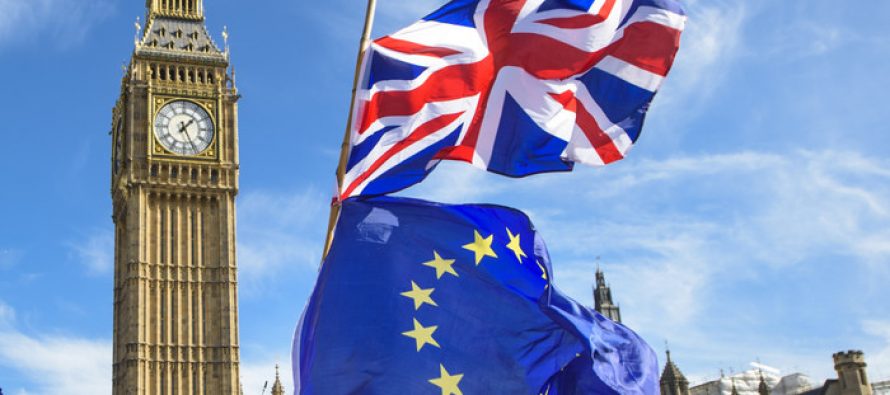
The pound fell against the greenback on Friday after news reports indicated that the UK might crash out of the EU on March the 29th as no extension, which was widely anticipated earlier, has been agreed on as yet. Furthermore, worse-than-anticipated contraction in December retail sales also attributed to the slide in the currency. The greenback, on the other hand, rallied on 10-month high manufacturing data. The GBP/USD pair closed at 1.2865 on Friday, almost 100 pips down from the previous day’s high.
Brexit developments and weak retail sales data turn the pound weak
Early last week, the pound rallied on news that Brexit could be deferred “by a couple of months” with an extension to Article 50. The idea was supported by influential Austrian Chancellor Sebastian Kurz who said: “If London presents a proper strategy and a plan, then postponing the withdrawal date by a couple of months could be conceivable.”
Even the EU’s chief Brexit negotiator, Michel Barnier, responded positively by saying “if they change, we’ll change.” He also opined that arriving at a deal was “in everybody’s interest” and that “something has to change” if an amicable agreement is to be secured.
However, the latest news report indicates the UK is still on course to exit the EU on March the 29th, 2019 – irrespective of the outcome of the Brexit negotiations. That’s because British Prime Minister May issued a notice to Donald Tusk, the EU Council President, under article 50 of the EU’s Lisbon Treaty on March the 29th, 2017.
Article 50 is a legal mechanism that launches a process, whereby, after two years, a Member State legally ends its full membership to the EU by either concluding an agreed exit agreement or by immediately terminating all common legal arrangements which support the membership. So unless one extends the process of Article 50, it is difficult to see how the United Kingdom is not walking out without a deal. None of the happenings last week has changed this path.
In the meanwhile, the UK Office for National Statistics reported a sharp decline in retail sales in December as shoppers refrained from spending cash after shopping for Christmas gifts at a discount in November. In December, total sales declined 0.9% on an m-o-m basis. That was worse than the 0.8% drop forecast by economists. Notably, in November retail sales rebounded with a 1.3% growth as consumers took advantage of the Black Friday bargains.
Commenting on the weak retail sales data, EY analyst, Howard Archer, said: “A major concern for retailers will be that already cautious consumers further limit their spending in the near term at least due to the heightened uncertainties over Brexit. Disappointment for retailers as sales volumes fell back markedly in December after November’s spike. This pointed to Black Friday-related promotions primarily bringing retail purchases forward to November from December rather than lifting sales overall.”
A survey conducted by the GfK institute indicated that consumer confidence in Britain declined to a five-year low in December, as Brexit-stoked inflation eroded the purchasing power of wages. The GfK index, a measure of consumer confidence, dipped to -14 in December, from -13 in November, and -10 in October.
On the declining consumer confidence, Archer said: “Consumers were clearly relatively cautious in their spending over the Christmas period, which ties in with the GfK consumer confidence index falling back in December to its lowest level since mid-2013 amid heightened concerns over the economy and Brexit.”
In the US, the Federal Reserve stated that industrial production grew 0.3% m-o-m in December and met Wall Street expectations. In November, industrial production increased 0.4%, revised downwards from the earlier estimate of a 0.6% rise. On an annualized basis, production rose 3.8% in the fourth-quarter, marginally down from 4.7% in the third quarter.
Notably, it was the most significant recorded growth in ten months. A sharp rise in mining activity, production of motor vehicles, and several other goods contributed to the increase in industrial production. The data also eased fears of a sharp downturn in factory activity.
The facts presented above suggest that the GBP/USD pair will remain bearish in the short-term.
The price chart indicates that the currency pair has broken the support at 1.2880 levels. The next support is expected only at 1.2730 levels. The GBP/USD pair is also trading below its 50-day moving average. Furthermore, the contrary reading of the MACD histogram indicates that the selloff is not yet over. Therefore, we are anticipating the GBP/USD pair to decline further.

Disclaimer: Any financial trading analysis offered here is our opinion and is not intended as advice or direction for investors. We cannot guarantee the success of any trades made as a consequence of this article, and we encourage traders to incorporate a strong money management strategy to limit losses when they enter the markets. Please use this article as part of your own research before formulating strategies prior to trading.


