On Friday, the Great Britain pound had a zigzag movement in the Asian session but started declining in the late European session after the UK Prime Minister Theresa May failed once again to persuade the Parliament to vote in favor of her Brexit plans. There were also numerous economic reports published on Friday. However, the market was fixated on the Brexit vote. After opening at 1.3045, the GBP/USD pair hit a low of 1.3002, before reversing to hit a high of 1.3135. However, the currency pair was unable to consolidate and shifted again to touch a low of 1.2978 before ending the day at 1.3030.
May’s Brexit deal voted down for the third time
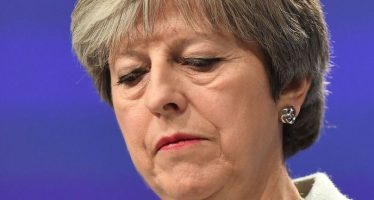
May tabled in Parliament a toned-down version of the Brexit Withdrawal Agreement on Friday, but the exit plan was again voted down by MPs. While the final date for Brexit has been delayed until April 12th, it implies that British lawmakers only have a fortnight left to engineer a strategy to prevent a no-deal scenario, which exists as the default. Shortly following the vote, Donald Tusk, President of the European Council, appealed for an EU emergency conference on April 10th to evaluate the exit of Britain from the EU.
May’s exit plans were voted down three times in a deeply polarized Parliament, even though the magnitude of each route has been declining. Friday denoted the recent defeat, with a 58-vote margin, as the Brexit fiasco is rumbling amid an increasing political impasse.
According to the UK media reports, May is anticipated to bring back her EU exit bill to Parliament for a fourth vote. Downing Street declined to elaborate on the possibility of a fourth vote, but Conservative Party Chairman Brandon Lewis did not discount the idea in a weekend conversation on BBC Radio 4’s Today program.
Lewis said MPs need to look at other options as the postponed April 12th Brexit deadline is looming.
Lewis said: “Parliament will continue this process on Monday and we need to look at all the options.”
The two most important economic releases, current account deficit, and GDP growth data were published on Friday.
According to the UK Office for National Statistics, the current account deficit widened to £23.7 billion in the fourth quarter of 2018 from £23.0 billion in the third quarter. Mark Carney, Bank of England Governor, said the huge current account deficit leaves Britain dependent on “the kindness of strangers.”
Commenting on the deficit economist Howard Archer, from the EY ITEM Club consultancy, said: “An elevated shortfall is a potential source of vulnerability for the UK economy — particularly if there was any major loss of investor confidence in the UK for any reason, most obviously Brexit concerns.”
In other news, the Office for National Statistics reported that the UK economy grew by just 0.2% on a q-o-q basis in the fourth quarter of 2018 and remained unchanged from the preliminary estimate. The published figures were in line with analysts’ expectations.
The soft GDP growth widened the deficit, and Brexit uncertainty is expected to keep the pound bearish in the short-term.
Technically, The GBP/USD pair is moving along a descending channel as shown in the image below. The MACD indicator also has a negative reading. As a result, we can expect the currency pair to move down in the short-term.

Disclaimer: Any financial trading analysis offered here is our opinion and is not intended as advice or direction for investors. We cannot guarantee the success of any trades made as a consequence of this article, and we encourage traders to incorporate a strong money management strategy to limit losses when they enter the markets. Please use this article as part of your own research before formulating strategies prior to trading.