The Aussie remained range-bound against the euro yesterday following the release of April inflation data that missed estimates. The June German GfK consumer climate index also improved slightly but remains in the negative zone. Therefore, neither the euro nor the Aussie were able to gain momentum. Overall, the EUR/AUD pair traded in a range of 1.6275 to 1.6344 in the past 24 hours.
According to the Australian Bureau of Statistics, the country’s consumer price index grew by 3.60% year over year in April, following a 3.50% increase in the previous month. The reported annual inflation contradicted forecasts of a 3.40% rise.
The increase was led by a 4.90% y-o-y rise in housing prices in April. Likewise, food and non-alcoholic beverages grew by 3.80% y-o-y in April. Transport rose by 4.20% y-o-y in April, while alcohol and tobacco increased by 6.50% in the same period.
New dwelling prices increased 4.90% y-o-y in April, reflecting a stable price increase of about 5% for the last nine months. Electricity prices increased by 4.20% y-o-y in April 2024.
Automotive fuel prices surged 7.40% y-o-y in April. On a m-o-m basis, automotive fuel prices grew by 2.20% in April, reflecting the third successive monthly increase.
Rental prices rose by 7.50% y-o-y in April, a decrease from 7.70% in the previous month. On an m-o-m basis, rental prices inched up 0.50% in April.
The health sector recorded a growth of 6.10% y-o-y in April. However, holiday travel and accommodation prices declined by 6.2% y-o-y in the same period.
In a separate news release, the Australian Bureau of Statistics stated that construction work declined by 2.90% q-o-q in the March 2024 quarter to A$64.03 billion following a 1.80% increase in the previous quarter, missing forecasts of 0.60% growth.
The decline was led by a 3.70% q-o-q decrease in building work in the March 2024 quarter to A$33.32 billion. Likewise, engineering work decreased by 2.10% q-o-q in 1Q 2024 to A$30.72 billion.
Non-residential building work fell by 7% q-o-q in Q1 2024. Similarly, residential building work decreased by 1.20% in the same period.
The German GfK consumer climate index improved to -20.90 for June, reflecting the fourth successive increase from -24 in the previous month, surpassing forecasts of -22.50.
Income expectations continued to rise in May, marking the fourth consecutive increase. The German GfK income expectations index gained 1.8 points, reaching 12.5 points. However, this growth rate has slowed down compared to the previous three months. Despite this slowdown, the index has increased by more than 20 points compared to the same period last year.
The inclination to purchase, in contrast to the earlier month, did not gain from improving the economic and income outlook in May. The indicator stood nearly unchanged, at -12.30 points, increasing by a mere 0.30 points.
The economic expectations index surged by 9.10 points to 9.80 points in May, reflecting the fourth consecutive increase.
The increase in inflation is expected to give rise to bets on another rate hike by the RBA in the upcoming policy meeting. Therefore, we anticipate the Aussie to remain slightly bullish against its peers, including the Euro, in the days ahead.
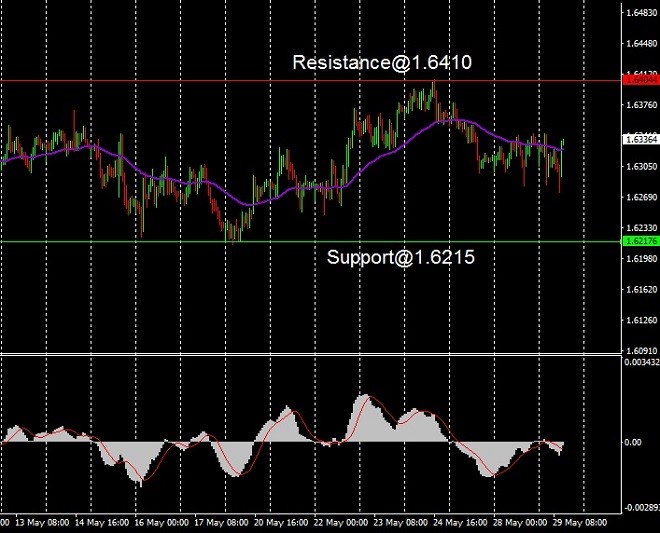
The historical price chart indicates that the EUR/AUD pair is descending after facing resistance at 1.6410. The next major support is anticipated to be only near 1.6215. Additionally, the MACD indicator is showing a negative reading. Therefore, we anticipate the EUR/AUD pair to remain in a downtrend in the near term. It would be prudent to open a position after the currency pair closes below its 50-day moving average.
Disclaimer: Any financial trading analysis offered here is our opinion and is not intended as advice or direction for investors. We cannot guarantee the success of any trades made as a consequence of this article, and we encourage traders to incorporate a strong money management strategy to limit losses when they enter the markets. Please use this article as part of your own research before formulating strategies prior to trading.