The Aussie fell against the yen yesterday following the release of worse-than-anticipated building approval data for June. The Aussie’s decline was also stoked up by better-than-anticipated Japan’s unemployment rate in June. Overall, the AUD/JPY pair fell from a high of 101.77 to a low of 100.57 in the past 24 hours.
According to Japan’s Statistics Bureau, the country’s unemployment rate inched down 2.50% in June from 2.60% in the previous month. Economists had anticipated Japan’s unemployment rate to remain unchanged at 2.60%. The reported figure reflects the lowest unemployment rate since January and the first improvement in five months.
The number of unemployed individuals declined by 3.30% (or 60,000) to 1.76 million in June. The number of employed people aggregated 68.22 million in June 2024, reflecting the highest level since the organization started gathering records in 1953, up 370,000 from June 2023.
On a seasonally adjusted basis, employment rose by 250,000 to a new high of 67.86 million. The labor force increased by 10,000 to 69.44 million. The number of individuals who got detached from the labor force decreased by 150,000 to 40.44 million.
Also, the labor force participation rate grew to 63.70% in May, reflecting the highest level since May 1999, from 62.10% in the comparable period last year. Notably, the jobs-to-applicants ratio fell to 1.23 in June from 1.24, reflecting the lowest level since April 2022.
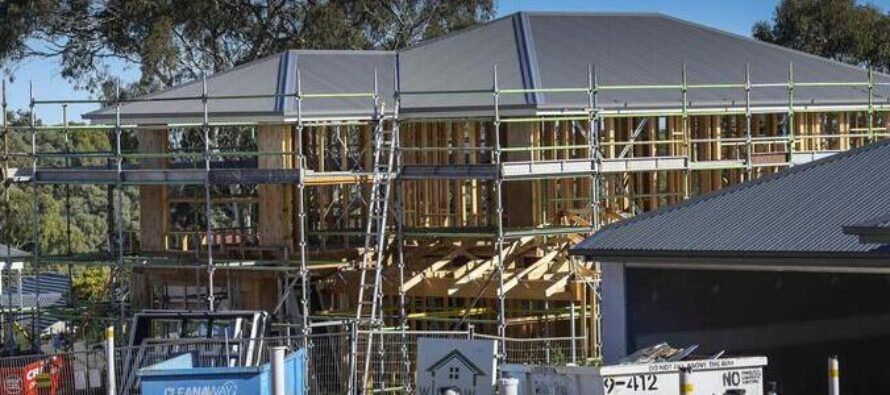
According to the Australian Bureau of Statistics, the country’s building approvals fell by 6.50% m-o-m in June to 13,237 units after increasing by 5.70% in the previous month. The reported figure was worse than the forecast of a 2.10% decline.
Private sector houses decreased by 0.50% in June to 9,078 units after growing by 1.90% in May. Specifically, private sector dwellings, devoid of houses, fell by 19.70% to 3,918 units, after a surge of 17.40% in May.
Also, the value of total buildings approved dipped 7% in June to $12.06 billion after a 0.40% increase in May.
The value of cumulative residential buildings decreased by 0.60% in June to $7.61 billion. This represents a 2.30% fall in new residential building construction in June to $6.44 billion. Additionally, alterations and additions jumped 10.20% in June to $1.17 billion.
The value of non-residential buildings plunged 16.20% in June to $4.46 billion, after a 2.70% decline in May.
The weak Australian building approvals data is expected to keep the AUD/JPY pair slightly bearish in the near term.
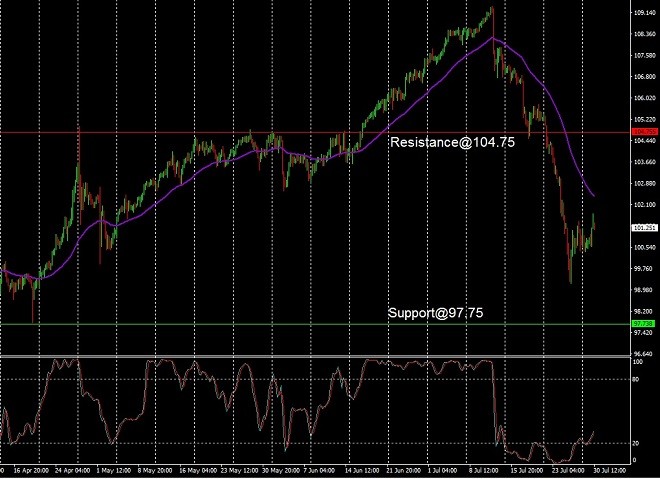
The historical price chart indicates that the AUD/JPY pair is descending after breaking the support at 104.75. The next major support is anticipated to be only near 97.75. Additionally, the currency pair is trading below its 50-day moving average, while the stochastic indicator is in the bearish zone. Therefore, we anticipate the AUD/JPY pair to remain in a downtrend for the next few trading sessions.
Disclaimer: Any financial trading analysis offered here is our opinion and is not intended as advice or direction for investors. We cannot guarantee the success of any trades made as a consequence of this article, and we encourage traders to incorporate a strong money management strategy to limit losses when they enter the markets. Please use this article as part of your own research before formulating strategies prior to trading.