The cryptocurrency market remains range bound with a slight bearish bias as Bitcoin (BTC) hovers around $30,000. While preparing this report, Bitcoin was trading at $30,021, up 0.10% in the past 24 hours. Ethereum (ETH) has lost 0.60% to trade at $1,897. XRP had gained 7.10% to trade at $0.8437.
Major cryptocurrencies, which have gained ground in the past 24 hours, ChainLink (LINK – $7.01, 0.40%), Avalanche (Avax- $14.13, 1%), Binance Coin (BNB – $242.72, 0.30%), EOS (EOS – $0.7709, 0.20%), Shiba Inu (SHIB, $0.00000778, 0.10%), Stellar (XLM, $0.1734, 27.80%), Solana (SOL, $26.78, 2.30%), Cardano (ADA, $0.3310, 4.60%), and Polkadot (DOT, $5.28, 0.90%).
Major cryptocurrencies, which have lost ground in the last 24 hours, are VeChain (VET, $0.0192, -0.10%), Bitcoin Cash (BCH, $245.56, -1.90%), and IOTA (IOTA – $0.1845, -0.90%).
Government Level Initiatives
US Fed’s New York Innovation Center Unveils Successful CBDC Trial
The US Fed’s New York Innovation Center (NYIC) published the outcome of its proof of concept (PoC) of the Regulated Liability Network (RLN), commonly referred to as the CBDC trial. The institution carried out the trial in partnership with ten financial entities. The process involved testing commercial bank deposit tokens and a wholesale central bank digital currency (wCBDC) on a distributed DLT framework.
The focus of the trial included both domestic and cross-border payments in the US dollar. The main intention of creating the Regulated Liability Network is to establish a single market framework for commercial banks across the globe and multiple central banks. Notably, the idea was initially tabled by the Bank for International Settlements (BIS) in its Unified Ledger concept.
Currently, payment transactions are facilitated via messaging platforms, wherein individual banks independently update their respective ledgers. By leveraging distributed ledger technology, the integration of messaging and settlement processes is achieved, resulting in a simplified reconciliation procedure.
Furthermore, an RLN interbank payment could concurrently update both the banks’ databases and the transfer of funds between the banks at the central bank. The RLN intends to reduce the expense and enhance the speed through tokenization and other path-breaking business models realized through programmable money.
Bank of England Partners with Nuggets for Privacy-Centric CBDC Identity Layer Trial
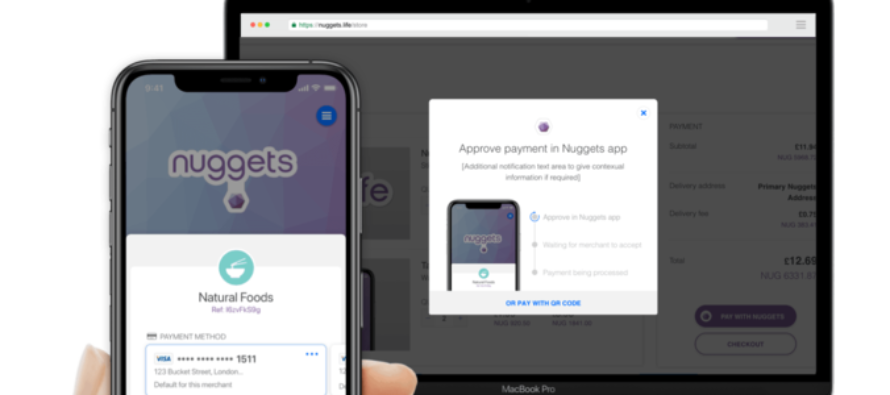
UK-headquartered Nuggets has joined hands with the Bank of England to trial and develop a privacy-focused identity layer for the country’s CBDC. The objective of the trial was to create a platform that could avoid monitoring and correlation of dealings while ensuring safety and compliance with anti-money laundering rules.
Nuggets, which leverages Zero-Knowledge proofs (ZKPs) technology, offers a decentralized identity solution that is reusable and interoperable. It allows users to carry their merit-based credibility wherever they go. Additionally, Nuggets, which facilitates data validation without exposing core information, gives users non-custodial cache storage for digital assets.
Once an account is set up, users will be able to make CBDC payments and validate on their own without going through further identity (AML or KYC) validations. The UK Treasury and Bank of England intend to roll out the CBDC by the end of this decade. Some of the crucial advantages of the digital pound would be cost-effective and simple cross-border payment assistance, as well as enhanced financial inclusion throughout the country.
South Korea Proposes Crypto Holdings Disclosure for Government Employees
South Korea’s Financial Services Commission (FSC) has unveiled an amended draft bill on a code of conduct for government employees necessitating the disclosure of their crypto holdings. The step is an outcome of a demand made by the Anti-Corruption and Civil Rights Commission, which has directed the rest of the institutions to take comparable steps.
The rule encompasses employees performing various duties, including drafting rules for digital assets or people engaged in probes. Furthermore, employees carrying out digital asset reporting or developing technologies in the domain should also disclose their crypto holdings.
The Korean Financial Services Commission (FSC) is not the first regulatory body to mandate these kinds of disclosures. As an example, the obligation was enacted by the United States Senate in 2018.
Miscellaneous
1 Million Bitcoin Wallets Indicate Growing Decentralization
According to information from Glassnode, the total count of wallets containing at least a single bitcoin has recently reached a record-breaking figure of 1,008,737 million. The increasing proportion of wallets containing at least one Bitcoin indicates a notable trend toward greater decentralization within the blockchain network. In the meantime, according to data from Glassnode, there has been a decline in the number of whales (wallets holding over 10 Bitcoins).
In May, the count of wallets containing a minimum of one Bitcoin exceeded one million and has continued to increase subsequently. The increasing popularity of ordinals is putting a huge strain on the Bitcoin network. Several indicators signal a rise in activity, including a spike in miners moving coins to crypto exchanges and an increasing proportion of addresses holding a balance in excess of 0.1.
Disclaimer: Any financial trading analysis offered here is our opinion and is not intended as advice or direction for investors. We cannot guarantee the success of any trades made as a consequence of this article, and we encourage traders to incorporate a strong money management strategy to limit losses when they enter the markets. Please use this article as part of your own research before formulating strategies prior to trading.