After remaining range-bound for almost three weeks, the cryptocurrency market has turned slightly bullish. The momentum increased after Bitcoin (BTC) broke above $3,600. Notably, most of the altcoins, except Litecoin (LTC – $43.36), has given up a significant portion of the gains made during the initial spike.
Litecoin is up 26.7% from the price it traded a week before because of the excitement created by the news report that the team is exploring the option of implementing a ‘MimbleWimble’ protocol that will make the crypto more fungible. While Ethereum (ETH-$120.11) and Ripple (XRP-$0.30) are trading at a slight loss of 0.6% and 0.8%, respectively, Tron (TRON-$0.024) and Stellar (XLM-$0.07688) are trading at a loss of 3.8% and 2.1%.
Government level initiatives
FDA employing blockchain trial to prevent drug counterfeiting
The Commissioner of the United States Food and Drug Administration (FDA) has suggested the use of blockchain for a trial program to be conducted to assess the performance of blockchain in improving supply chains.
The Pilot Project Program will be carried out in accordance with the Drug Supply Chain Security Act (DSCSA Pilot Project Program). It aims to attract top industry players with proven expertise in emerging innovative technologies. The FDA will accept applications until March 11th.
This move represents the first step in the creation of the digital supply chain platform, which will be operational in 2023, specifically for tracing and preventing the counterfeiting of drugs. Although not confirmed, analogs of these platforms use blockchain technology to update conventional systems.
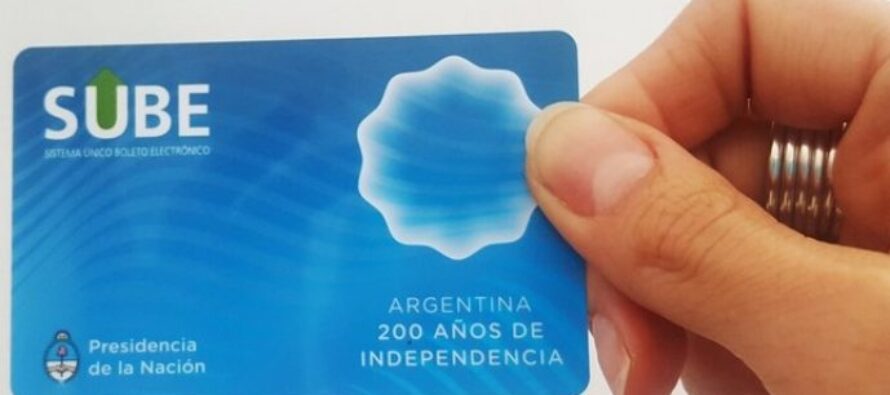
Argentinian commuters to use Bitcoin to fund their SUBE cards
Commuters in Argentina will now be able to use Bitcoins in more than 37 locations across the nation to add currency to their SUBE public transport card. This was due to a recent partnership between Alto Viaja, which provides loading facilities for transport cards, and Fintech company Bitex. Bitcoin can be loaded in the SUBE cards seamlessly thanks to Bitex’s blockchain technology to ensure that financial services can be delivered to users. Local citizens can also use Alto Viaje’s website to credit their SUBE cards with Bitcoins.
Manuel Beaudroit, Chief Marketing Officer of Bitex Platform, stated that more than 7 million users use SUBE cards. In over 37 locations in Argentina, each of the SUBE card users can be found. The SUBE card can be used to purchase travel tickets on public transport, trains, and even the subway stop, making journeys easy and convenient.
Commenting on the facility, Beaudroit said, “We believe that this type of project is of great importance since it brings technology as disruptive as bitcoin to the common people, demonstrating the true value and the applications it has in everyday life.”
Private sector initiatives
Next phase of blockchain project to be launched by Pistoia Alliance
The Pistoia Alliance, established in 2007, is a non-profit organization with representatives of well-known pharmaceutical companies, including Pfizer, Novartis, and GSK. The Pistoia Alliance was created to help integrate new technology in the fields of research and development (R&D) of the companies. The Alliance has already expanded its project to include data sharing, data identity, and data integrity. The newest project will focus on the use of blockchain to validate sources for data identification, data integrity, and organizational sharing.
Prior to its entry into data management based on the blockchain, Pistoia focused on providing emerging technology to the medical industry. Pistoia has pointed out a recent survey that found that the main barriers to the adoption of blockchain are the availability of trained personnel and in-depth knowledge of the technology. The study also indicated that 20% of participants believe that blockchain adds value only to a certain level.
Bakkt confirms completion of first acquisition of RCG assets
An official tweet from Bakkt, the much-anticipated digital asset platform operated by the Intercontinental Exchange (ICE), confirms that its first acquisition has been completed. In mid-January, Bakkt announced its intention to acquire RCG’s assets. The tweet marks the completion of the acquisition of Rosenthal Collins Group (RCG) assets.
Regarding the acquisition, Bakkt said, “With today’s closing of our transaction with Rosenthal Collins Group, we welcome great new team members to Bakkt.”
Furthermore, Bakkt issued the following clarification regarding the purchase of certain assets in the company: “RCG’s remarkable heritage, culture, and expertise will help us build out a trusted institutional infrastructure for digital assets.”
As the company’s CEO, Kelly Loeffler, explained at that time, the acquisition means that the company is slowing down its operations while anticipating regulatory clearance by the United States Commodity Futures Trading Commission (CFTC) for the official launch of strictly regulated trading in crypto markets.
Loeffler also said that the takeover expands Bakkt’s crisis management and treasury operations with frameworks and know-how, and could contribute to Bakkt’s anti-money laundering (AML) policy and know your customer’s policy (KYC).
IBM to relieve droughts with blockchain and IoT technology
In California (US), a collaborative IBM program to solve droughts is being undertaken with the use of blockchain and Internet of Things (IoT) technology. The Freshwater Trust (TFT) and University of Colorado of Boulder reported that IBM Research and sensor technology provider SweetSense has partnered with a non-profit organization to utilize blockchain and IoT to sustainably manage the use of groundwater at Northern California’s Sacramento-San Joaquin River Delta, which is “one of the largest and most at-risk aquifers in North America.”
An aquifer represents an underground rock that holds water that can be pumped and distributed throughout a region. The Sacramento-San Joaquin River Delta, spread across 1,100 miles, is perceived to be the “nexus of California’s statewide water system.” The trial program will be conducted in that region.
The project will use IoT sensors to relay water extraction data to orbiting satellites which are also used to detect weather correlations and rainfall. Data is then saved on the IBM Blockchain Platform, which is hosted on the cloud and supports smart contracts.
Disclaimer: Any financial trading analysis offered here is our opinion and is not intended as advice or direction for investors. We cannot guarantee the success of any trades made as a consequence of this article, and we encourage traders to incorporate a strong money management strategy to limit losses when they enter the markets. Please use this article as part of your own research before formulating strategies prior to trading.