
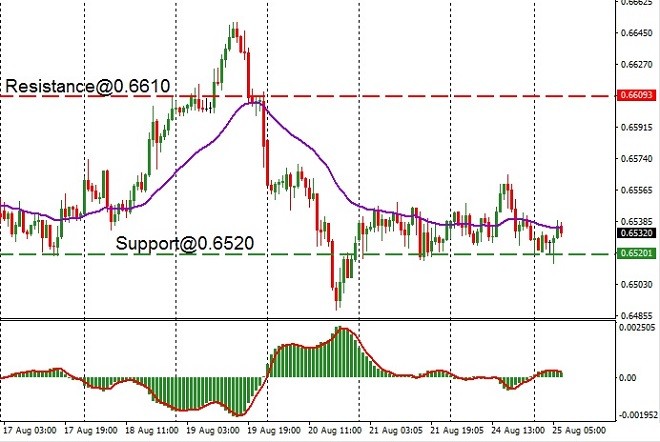
The weak second-quarter retail sales data published by Statistics New Zealand kept the market away from betting on the kiwi dollar. However, the greenback was unable to take advantage due to ongoing trade and geopolitical tensions with China, in addition to rising COVID-19 cases. In the past 24 hours, the NZD/USD pair rose from a low of 0.6515 to a high of 0.6565.
Statistics New Zealand stated that retail sales declined 14.6% q-o-q in the June quarter, after falling by 1.2% in the March quarter. Economists had anticipated the retail sales to shrink by 16.3% in the second quarter. The decline was primarily due to the COVID-19 outbreak, which severely affected spending.
Excluding volatile goods such as food and fuel, core retail sales decreased 13.7% q-o-q in the second quarter, after increasing by a mere 0.1% in the first quarter, but better than the 15% decline anticipated by analysts.
On a y-o-y basis, the value of retail sales decreased 15% (or $3.60 billion) in the June quarter. The total volume of retails sales decreased 14%. All 16 regions in the country recorded a drop in sales values.
Twelve of the 15 industrial sectors posted lower sales values in the June quarter, compared with the similar period last year. The considerable decline in each of those industries was the most significant drop recorded since the institution began publishing the data in 1995.
While food and beverage services fell 40% ($1.20 billion), fuel sales decreased 35% ($770 million). Similarly, motor vehicle and parts sales fell 22% ($729 million), and accommodation decreased 44% ($418 million).
Analysts at Westpac anticipate the economy to shrink by 13% in 2Q 2020. The financial institution also anticipates subdued growth in spending for the rest of the year due to a lack of tourists from foreign countries and the end of the subsidy program.
The US dollar, however, is unable to take advantage of the weak economic data and gain ground against the kiwi dollar. The vigorous monetary easing by the Federal Reserve has raised worries that it may lose its prominence as the global reserve currency. Adding fuel to the fire is the rising inflation forecasts (CIBC economists are forecasting the US core inflation to reach a peak of 2.5% in spring 2021) and gold prices.
In general, the US dollar shows a tendency to lose value when risk-on sentiment prevails and vice-versa. That is one of the prime reasons for the greenback to record its peak during the February-March period when the COVID-19 panic gripped the world.
Since April, the greenback has been weakening as market sentiment turned bullish. Furthermore, currency swap lines opened by the Fed resolved the issue of dollar illiquidity. Currently, the huge quantum of US dollars made available through swap lines is having a downward effect on the greenback. The trend is likely to continue in the short-term.
Technically, the NZD/USD pair is having solid support at 0.6520. The next resistance is anticipated only near 0.6610. The currency pair is hovering around the 50-day moving average, while the Chaikin money flow indicator has a positive reading. Therefore, we are anticipating the currency pair to move up in the short-term.
Disclaimer: Any financial trading analysis offered here is our opinion and is not intended as advice or direction for investors. We cannot guarantee the success of any trades made as a consequence of this article, and we encourage traders to incorporate a strong money management strategy to limit losses when they enter the markets. Please use this article as part of your own research before formulating strategies prior to trading.