The eurodollar remains range-bound against the greenback despite the release of better than anticipated macroeconomic data from Germany. In fact, the eurodollar continues to hover near the two-year low mainly because the higher US Treasury yields have lent momentum for the greenback.
Furthermore, political uncertainty in Italy also did not permit the euro to gain against the US dollar. After opening at 1.1081, the EUR/USD pair declined to a low of 1.1066 before recovering to trade near the opening level.
Germany’s Destatis stated that the Producer Price Index (PPI) increased 0.1% m-o-m in July. In the previous month, PPI recorded a drop of 0.4%. Analysts had anticipated no change in the PPI for July. On a y-o-y basis, the index increased 1.1%. Electricity prices were the main contributor to the increase.
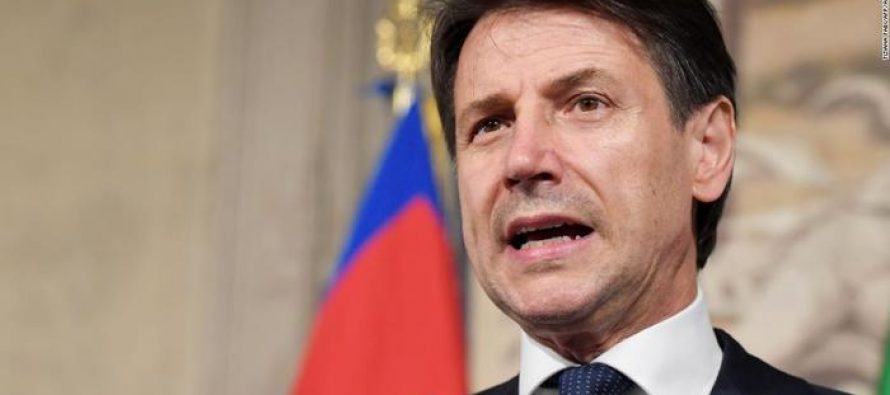
In Italy, Prime Minister Giuseppe Conte announced his resignation after his populist government failed to receive the support of Matteo Salvini’s League, an important coalition member. Earlier in August, Salvini withdrew support for the 5-star Movement, after months of backlash over crucial policies. Italy’s president, Sergio Mattarella is now in discussion with party leaders to assess whether any of the parties can come together and form a stable government. If not, he will call for elections, which are likely to be conducted in October.
Regarding the impact of Italy’s no-confidence vote on the euro, Chris Turner, head of the Forex strategy at ING, said: “The possible success of the no-confidence vote in Italy today could push euro/dollar towards and even below the psychological 1.1000 level today.”
However, Turner is optimistic that the euro’s declines are limited. Turner said, “[…] because the negative spillover into the euro from periods of political uncertainty in Europe has been somewhat limited over the past year.”
Yields on US benchmark 10-year government bonds recovered from three-year lows yesterday, partly due to the prospects of Germany discarding its balanced budget policy and China offering more economic stimulus.
Yields also improved after Boston Fed President Eric condemned further rate cuts by the US Federal Reserve, and also from the White House’s decision to extend a license for Chinese telecom firm Huawei. The Forex and other financial markets will now be closely monitoring the annual symposium of worldwide central bankers that starts on Friday at Jackson Hole, Wyoming, but currency strategists wonder whether it will be able to restrain demand for the US dollars.
Lee Hardman, a currency analyst at MUFG, believes that the US dollar will remain strong, at least until the meeting of international central bankers. Hardman said, “Ahead of the Jackson Hole summit later this week, there seems little reason for the dollar to weaken.”
Last week, notably, the Treasury yield curve (two and ten year) inverted, signaling a likely recession, which caused a panic in the financial markets. The curve of Treasury yields remains inverted and even steepened yesterday. The dollar index remained flat at 98.375 after rising to 98.40, representing a two-and-a-half-week high.
The positive German PPI data and higher US Treasury yields are expected to keep the EUR/USD pair range-bound in the short-term.
The historical price chart indicates that the EUR/USD has bounced off the support at 1.1065. The next resistance is anticipated at 1.1115. Additionally, the MACD indicator remains flat near the zero level. As a result, we can expect the currency pair to trade in a narrow range of between 1.1065 and 1.1115 in the short-term.

Disclaimer: Any financial trading analysis offered here is our opinion and is not intended as advice or direction for investors. We cannot guarantee the success of any trades made as a consequence of this article, and we encourage traders to incorporate a strong money management strategy to limit losses when they enter the markets. Please use this article as part of your own research before formulating strategies prior to trading.