On Friday, the New Zealand dollar was moving in a mixed manner, rallying against some competitors, declining versus others, and remaining flat against a few others. Both global (China, in particular) and domestic macroeconomic data were mixed as well, allowing no upper hand to either bulls or bears.
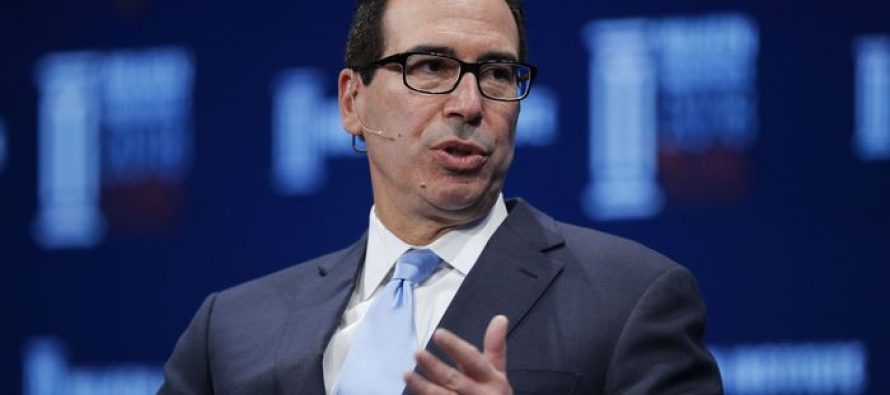
During the US session, the Kiwi dollar, however, gained slightly against the greenback due to the lower-than-anticipated University of Michigan consumer sentiment index. But, on Saturday, the US Treasury Secretary Steven Mnuchin revealed that the trade talks with China are nearing the ‘final round.’
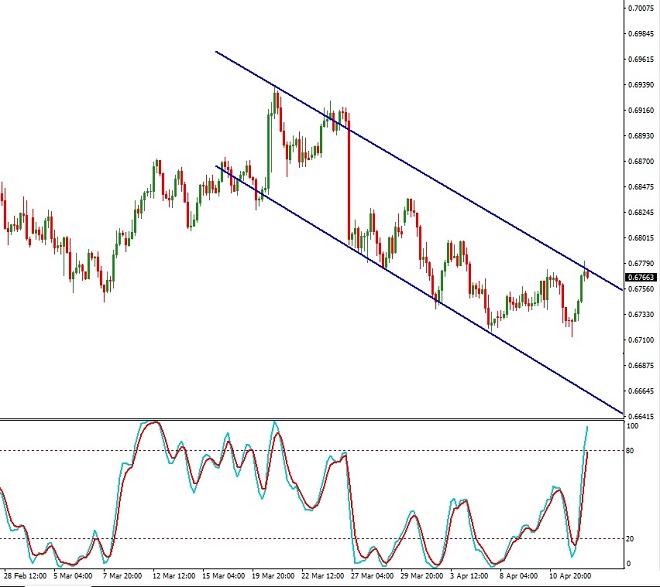
The optimistic message may tilt the NZD/USD pair’s movement in favor of the US dollar in the coming week. From a low of 0.6710, the NZD/USD pair rallied to a high of 0.6780 on Friday, before closing at 0.6765.
US-China trade talks to dominate currency market movements
According to the latest BNZ – BusinessNZ Performance of Manufacturing Index (PMI) – the country’s manufacturing sector saw a decreased level of expansion last month. The index stood at 51.9 at the end of last month, down from 53.4 in February. A reading above 50 indicates expansion and vice versa.
China, which is the biggest trading partner of New Zealand, recorded a surplus trade balance of $32.6 billion in March, an increase from $4.1 billion in February and surpassing analysts’ estimates of $7.7 billion by a huge margin. Even though the figures were positive for the Chinese economy, it was not so for its partners who supply mostly raw materials to the world’s second-largest economy.
While exports increased by 14.2% on a yo-y basis, imports fell 7.6%, implying that China was purchasing fewer goods.
In the US, the University of Michigan’s reported a decline in the preliminary sentiment index to 96.9 in April from the prior month’s 98.4. Economists surveyed by Bloomberg had anticipated a reading of 98.2. The measure of current conditions increased to 114.20, which represents a four-month high.
Likewise, the expectations gauge dropped to 85.8. For the first time in three months, the consumer sentiment declined, failing to meet estimates, as the long-term economic outlook fell to the lowest in over a year and optimism over a tax overhaul dwindled.
On Saturday, the US Treasury Secretary Steven Mnuchin said that the country’s trade agreement with China would go far beyond earlier efforts to open the latter’s markets to the US enterprises and believes that the two parties are nearing the last round of discussions.
While speaking to reporters on the sidelines of the International Monetary Fund and World Bank spring meetings, Mnuchin disclosed that the US Trade Representative Robert Lighthizer would conduct two meetings next week with Chinese Vice Premier Liu He.
Furthermore, Mnuchin issued the following statement regarding the US-China trade talks: “I think we’re hopeful that we’re getting close to the final round of concluding issues.”
Mnuchin said that the new agreement would cover issues beyond what was pondered in the 2016 Bilateral Investment Treaty discussions.
He said, “We are making progress; I want to be careful. This is not a public negotiation … this is a very, very detailed agreement covering issues that have never been dealt with before. This is way beyond anything that looked like a bilateral investment treaty.”
The optimistic statement made by the US Treasury Secretary Steven Mnuchin about the US-China trade talks is expected to strengthen the greenback this week.
Technically, the NZD/USD pair is moving along a declining channel as shown in the image below. The stochastic oscillator is in the overbought region. As a result, we can expect a downtrend to begin soon.
Disclaimer: Any financial trading analysis offered here is our opinion and is not intended as advice or direction for investors. We cannot guarantee the success of any trades made as a consequence of this article, and we encourage traders to incorporate a strong money management strategy to limit losses when they enter the markets. Please use this article as part of your own research before formulating strategies prior to trading.