
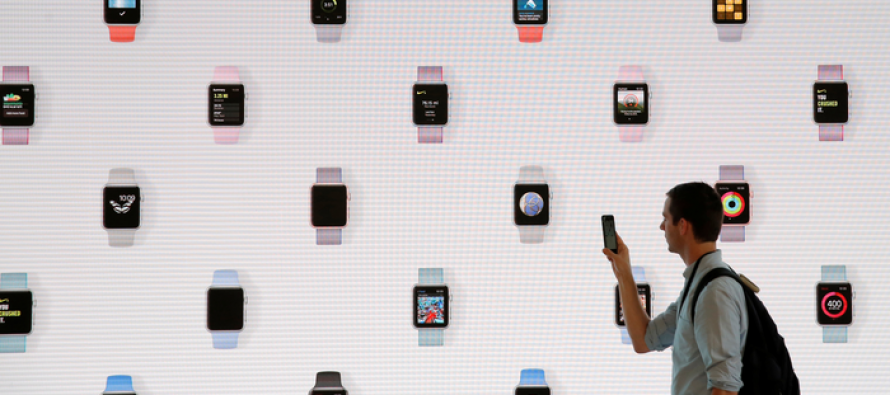
Last week was yet another milestone in the history of Apple Inc. (NASDAQ: AAPL). The frontrunner in the mobile handset business introduced a flurry of new products to the market. This includes the iPhone7, iPhone 7 Plus, Apple Watch Series 1 and 2, and additional iPad updates. The popular handsets were made smaller, with the iPhone 7 showcasing a screen size of 4.7 inches and the iPhone 7 Plus a screen of just 5.5 inches. Controversially, both models no longer feature the 3.5mm headphone jack, with a single lightning port provided instead. Apple did not divulge the first-week sales figures. However, considering their track record and third-quarter results, we believe that the share price will remain range-bound with a bearish bias, as explained below. The shares of Apple closed at $105.54 on Tuesday.
The Cupertino, California-based company reported a third-quarter net income of $7.8 billion or $1.42 per share on revenue of $42.4 billion. During the similar period last year, Apple recorded a net income of $10.7 billion or $1.85 per share on revenue of $49.6 billion. The company managed to exceed the analysts’ estimate of $1.38 per share on revenue of $42.1 billion.
For the fourth quarter, the company anticipates revenue in the range of $45.5 billion to $47.5 billion. The gross profit is expected to be between 37.5% and 38%. The analysts anticipate Q4 revenue of $45.94.
It can be noted that the Q3 revenue plunged 27% compared to last year. Apple derived 63% of its revenue from the overseas market in the quarter ending June 2016. Similarly, the sales of the iPhone contribute more than 55% of the total sales of the company. During Q3 2016, iPhone shipments fell 15% to 40.4 million units, from 47.53 million units in Q3 2015.
The revenue from China declined 33% y-o-y to $8.8 billion. The gross margin also declined to 38%, from 39.7% a year ago. As per Gartner research firm, Apple’s market share in the global smartphone market declined to 12.9% in Q2 2016, from 14.6% in Q2 2015.
According to KGI Investment, the smartwatch shipments in 2016 are expected to decline 25% y-o-y to 7.5 million units, from 10.6 million units in 2015. At the end of the second quarter, the market share of Apple had declined to 47%, from 72% in the similar quarter of 2015. On the other hand, the market share of Samsung had increased to 16%, from 7% in the same period. Thus, we believe that the stock will remain fundamentally weak during the fourth quarter of 2016.
Following the introduction of the iPhone 7 and iPhone 7 Plus in the market, the share price of Apple had fallen below the 50-day moving average. This indicates bearishness on the counter. The stochastic indicator is declining and a reading of about 62 indicates the possibility of further decline in the price. The next support level for the stock is at 96. On the upside, resistance exists at 106.

So, a trader should consider purchasing a one-touch put option to gain from an imminent decline in the share price. Selecting a contract with a validity period of one month and a target level of $98 or higher would benefit a trader.
Disclaimer: Any financial trading analysis offered here is our opinion and is not intended as advice or direction for investors. We cannot guarantee the success of any trades made as a consequence of this article, and we encourage traders to incorporate a strong money management strategy to limit losses when they enter the markets. Please use this article as part of your own research before formulating strategies prior to trading.


